

Marine pipeline decisions require coordinated review of the conveyed medium, dimensions, connection details, handling and installation conditions.
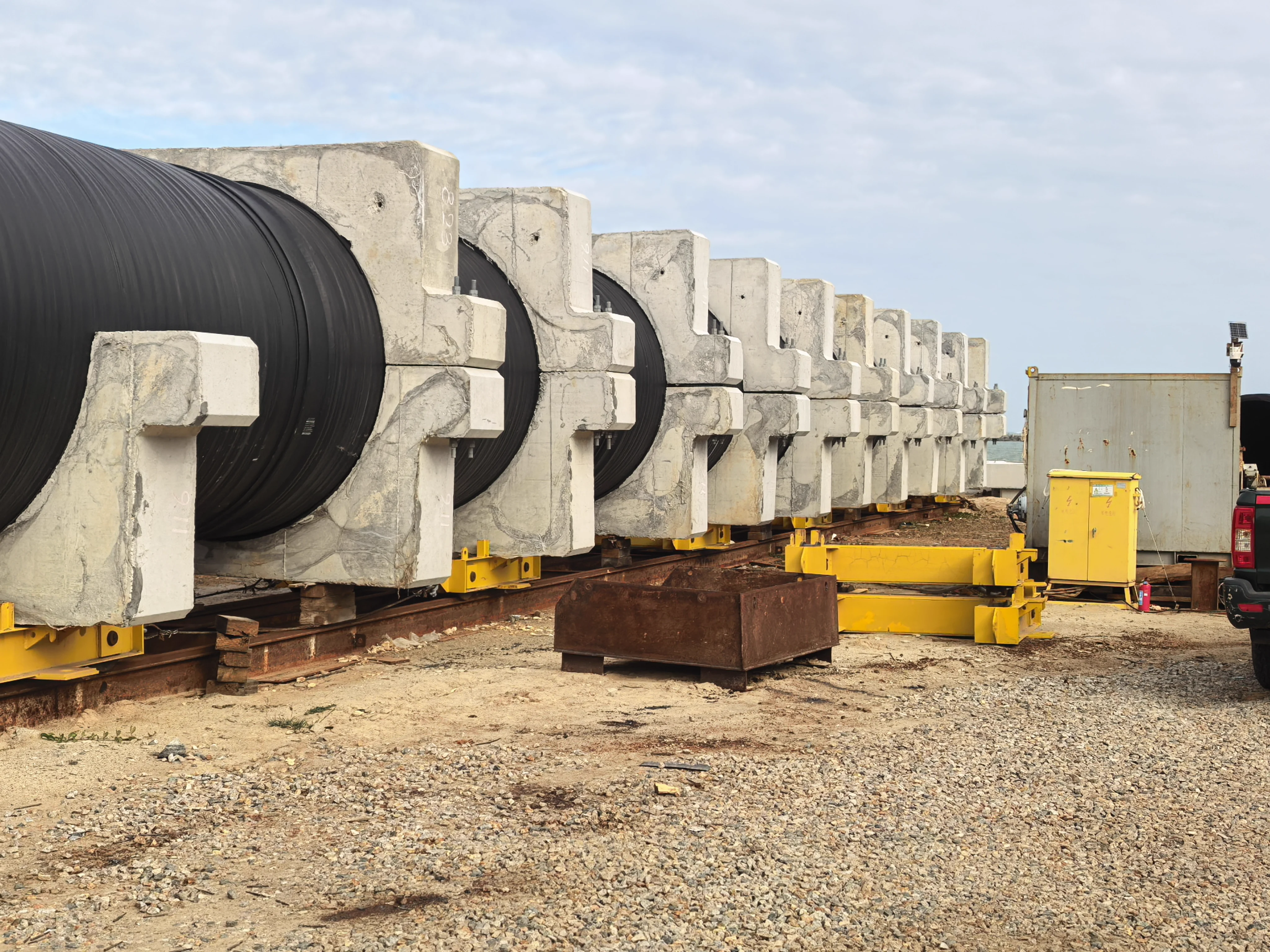
Marine intake and outfall projects place pipe selection in a wider engineering and installation context. The material and pipe configuration must be assessed alongside the required flow, connection method, handling approach and site conditions. Establishing these inputs early makes technical review and project coordination more effective.
1. Define the service requirement
Describe whether the system is intended for intake, discharge, cooling water, wastewater or another marine-water application. State the medium, design flow, required diameter and whether the line will operate under pressure or as a gravity-flow system.
This first distinction guides the review of pressure-pipe or structured-wall product options and the data that must be confirmed for the project.
2. Plan the system components and connections
Large-diameter marine systems often include more than straight pipe. Bends, branches, reducers, flanges and project-specific fabrication may be needed to connect the pipeline to structures or equipment.
Provide drawings, connection preferences and information about transitions to other materials. This allows the pipe supplier to understand the scope of special components and installation guidance required.
3. Address handling and installation early
Oversized pipe sections create practical questions around manufacturing, transport, site handling and installation sequencing. These questions should be reviewed at the beginning of the project rather than after the pipe dimensions are fixed.
For pipe projects above 3 metres in diameter, Shunfang can assess whether moving pipe-production equipment to the project site is a suitable option. Any on-site production plan should be reviewed against the actual location, work area and project schedule.
4. Prepare the technical enquiry
Submit the application, required dimensions, flow or pressure information, pipe length, quantity, connection method, applicable standard, drawings and required delivery date. Clear inputs lead to a more useful technical response and a more realistic supply plan.
Continue the marine project review
See the marine intake and outfall application requirements and prepare the available drawings, dimensions and installation information for engineering support.
Separate pipeline duty from marine installation method
“Marine pipeline” describes the project environment, not one pipe configuration. First determine whether the line operates as an intake or discharge, whether it carries internal pressure or gravity flow, and what medium and flow are involved. Then review how the pipeline will be assembled, handled and installed.
The same route can contain shore, transition and offshore sections with different constraints. Identify interfaces with structures, pumps, chambers, diffusers or other pipe materials. These interfaces often drive fabricated components and connection details earlier than straight-pipe production.
Define the route and installation interfaces
Provide available route information, water depth, shore approach, seabed or support conditions, access, work area and installation sequence. Shunfang supplies pipe and project support, while the marine designer and installation contractor remain responsible for the complete marine engineering plan.
A practical early-stage information package normally includes:
- Intake or outfall service and conveyed medium
- Design flow and pressure or gravity operating mode
- Diameter basis, route length and section-length assumptions
- Shore crossing and interfaces with civil structures or equipment
- Proposed connection and fabricated fitting requirements
- Handling, towing, lifting or other installation concepts under review
- Required standards, inspection records and approval documents
- Project location, destination, schedule and available drawings
If the deployment concept is not final, state which alternatives are being evaluated. This gives the supplier a clearer boundary for product and fabrication discussions.
Coordinate fabricated components with straight pipe
Marine intake and outfall systems may require bends, reducers, branches, flanges, transition pieces or other project-specific fabrication. List each known component and identify which items are expected from the pipe supplier. Confirm drawing approval, dimensions, connection type and inspection scope before production.
Long straight lengths can affect jointing and deployment planning, while oversized sections affect transport and handling. For projects above 3 metres in diameter, on-site production feasibility can be reviewed against site area, utilities, equipment access, production control and the overall programme.
Build a quotation package that supports engineering review
Ask suppliers to state the product system, material, dimensional basis, offered section length, connection method, fittings scope, inspection documents, packaging and delivery assumptions. Keep exclusions visible. A clear commercial response should make it possible to identify what still belongs to marine design, civil works or the installation contractor.
The website can support early product selection, but it cannot replace route design, hydraulic analysis, stability review, installation engineering or local approval. Use the marine application overview to identify the initial product path and request engineering support for the supplier-side review.
Frequently asked marine HDPE pipe questions
Is every sea outfall a gravity structured-wall system?
No. An outfall may operate under gravity, pressure or changing conditions. State the operating duty first so the correct product family and design inputs can be reviewed.
When should connection details be fixed?
Discuss connection concepts at the beginning and confirm them before production. Section length, fabricated fittings, shore interfaces, site equipment and installation sequence can all depend on the selected connection method.
Can the supplier select the complete marine installation method?
The supplier can provide product information, fabrication input and installation guidance within its scope. The project designer and specialist installation team must evaluate the complete route, stability, deployment, safety and approval requirements.
What is the best first document to send?
Send the latest route or general-arrangement drawing together with a short design-basis note covering service, flow, operating mode, diameter, length, components, connection concept, location and schedule. Mark preliminary values clearly.
Move from a broad marine requirement to a reviewable scope
A useful marine intake or outfall enquiry connects the pipe system with interfaces, fabrication, installation assumptions and delivery. Prepare the available facts, identify what is still under design and submit them through the project enquiry form for a structured supplier response.
Technical content is based on Shunfang company materials and general project-selection considerations. Final product selection requires project-specific review.
Discuss your pipe project