
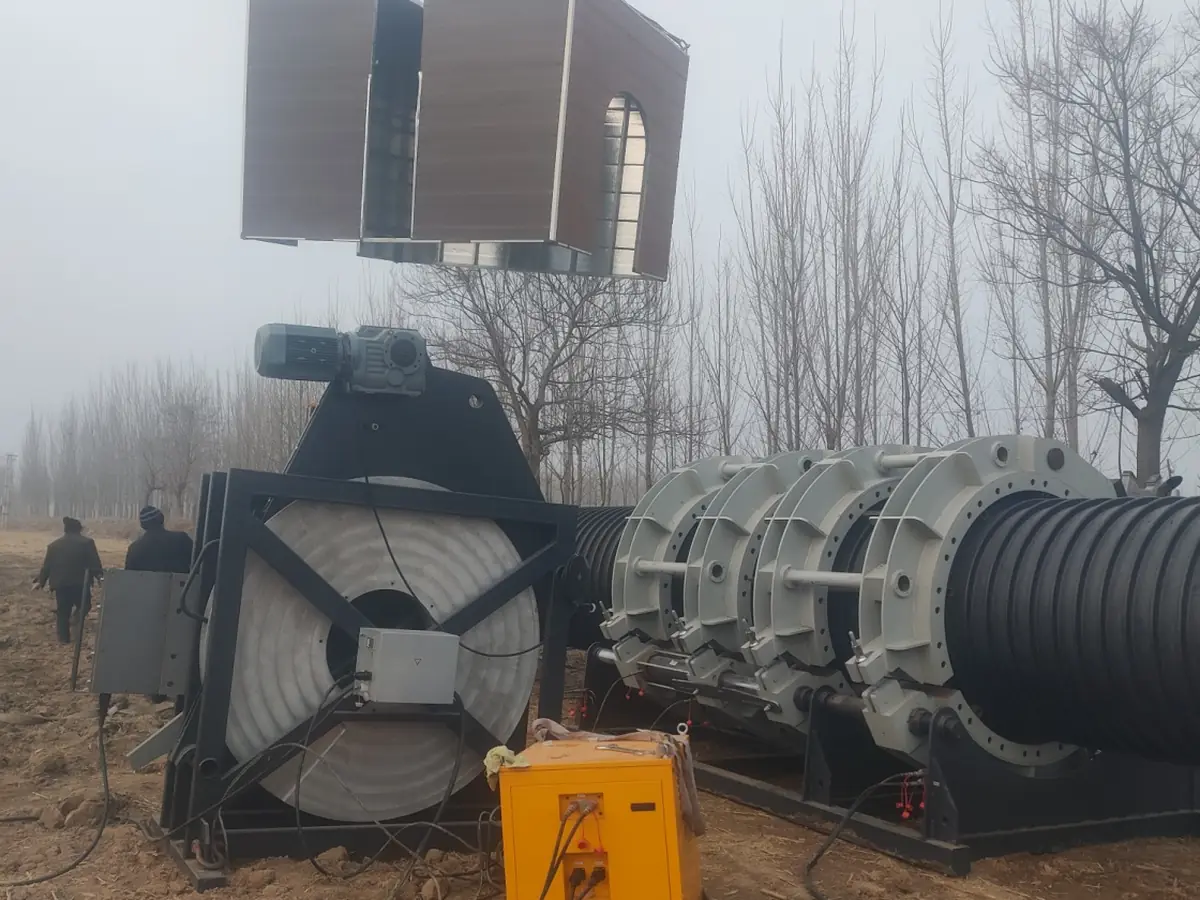
A practical jointing-plan checklist for contractors buying large-diameter HDPE pipe: match pipe construction, site access, fittings and QA records before tender.
Large-diameter HDPE pipe jointing should be planned before the pipe order, not left as a field detail after delivery. The connection chosen for a pressure main may differ from one used for a gravity structured-wall line, and either can fail as a procurement package if the fitting, equipment, working space, inspection method or responsible party is undefined. This guide helps contractors and buyers turn drawings into a jointing schedule and a comparable supplier enquiry. It is a planning checklist, not a universal welding procedure. The project specification, applicable standards and pipe and fitting manufacturers must approve the final design and field method.
Start with the duty of each pipeline section
Mark every section as pressure conveyance, gravity drainage, a transition, a chamber connection or an equipment interface. Record the conveyed medium, operating and maximum design conditions, internal or external load basis, diameter convention, wall construction and the design life required by the project. A nominal diameter alone cannot identify a compatible joint. For example, a pressure-rated solid-wall pipe and a structured-wall drainage pipe can have different end geometries and different joining options.
Do not copy the joint symbol from a nearby drawing until the actual product family is confirmed. Review the PE pressure pipe system and the spiral-wound structured-wall pipe system as separate starting points. Ask the engineer and supplier to identify the exact pipe, fitting and connection combination for each location. Where a line changes duty, document the transition rather than assuming one joint method extends across the whole route.
Match the joint method to the confirmed pipe
Shunfang's fittings and jointing overview presents butt fusion, electrofusion couplings or bands, spigot-and-socket seals, flanged interfaces and applicable fabrication methods. These are possible routes, not interchangeable options for every size or wall profile. The approved method depends on the product construction, joint design, pressure or sealing duty, access and equipment.
For a compatible solid-wall pressure system, ask whether butt fusion is specified, which machine covers the actual diameter and wall, and how alignment, facing, heating, force and cooling will be controlled. For an electrofusion option, identify the specific approved fitting, surface preparation, installation clearance, power supply and traceability requirements. For a structured-wall gravity line, obtain the supplier's approved band or socket detail, seal requirements, insertion or assembly method and bedding constraints. Do not describe an extrusion weld used in fabrication as a substitute for a pressure joint without explicit design approval.
Build a joint register before requesting prices
Create one row for every standard field joint and special interface. The register makes quantities and responsibilities visible to every bidder. Include:
- Chainage or drawing reference and the two components being joined
- Pipe product, material, diameter basis, wall construction and end preparation
- Operating duty and the joint detail approved by the designer
- Fitting or consumable description, quantity and supply responsibility
- Field equipment, power, lifting and working-space requirements
- Operator qualification, inspection hold point and acceptance record
- Repair or rework route if the joint is rejected
Count transitions to valves, pumps, chambers, existing mains and other materials separately from pipe-to-pipe joints. A quotation that includes straight pipe but omits adapters, backing rings, gaskets or site jointing support is not comparable with a complete installed-system offer. Confirm whether each special component is factory fabricated or field assembled and who checks its dimensional fit.
Check whether the site can actually make the joint
Large pipe needs adequate support and a controlled working area. Show pipe length, delivery sequence, crane or excavator access, jointing machine location, trench width, ground bearing, dewatering and safe movement on the site plan. A machine that can clamp the nominal pipe size may still be unusable if the trench cannot accommodate it or the pipe ends cannot be aligned. Include a sheltered or otherwise controlled work arrangement when the approved process and weather conditions require it.
Plan the sequence from unloading to temporary storage, end protection, preparation, joining, inspection and lowering or backfilling. Identify who supplies generators, handling frames, clean working surfaces and replacement fittings. Keep equipment maintenance and calibration evidence with the method statement where the project requires it. For a long line, estimate the number of working fronts from realistic handling and inspection time, not from a best-case joint cycle taken out of context.
Define the method statement and quality evidence
The contractor should submit a method statement for the specific pipe-and-fitting combination. It should identify the approved procedure, equipment range, trained personnel, preparation steps, environmental limits, data to record, inspection criteria, hold points and safe response to an interrupted cycle. Use manufacturer instructions and the project specification for process parameters; this article does not prescribe heater temperature, pressure, cooling time or allowable bead dimensions.
The Plastics Pipe Institute advises that people joining PE systems be trained and qualified and that fusion equipment match the selected pipe and procedure. Its joining QA/QC guidance also stresses manufacturer information for mechanical connectors. For applicable butt-fusion work, the Institute describes visual bead review and the option to keep machine data logs as joint records in its bead inspection guidance. Apply those references only within the approved product and procedure scope.
Coordinate valves, chambers and material changes
Interfaces deserve their own drawing and bill of materials. Identify the mating flange or coupling, pressure and dimensional compatibility, gasket, backing ring, bolt arrangement, restraint and future access. The Plastics Pipe Institute's discussion of PE flange adapters illustrates why the PE-to-fitting end and the bolted end must both be specified. The designer must confirm the actual assembly and support arrangement for the project.
For a gravity system, record where the pipe enters a chamber, how differential movement and watertightness are addressed, and what inspection is required before concealment. For a pressure system, identify restraints and the test boundary. Do not treat a pipe-to-pipe fusion procedure as a complete instruction for a valve transition or a repair coupling.
Agree on acceptance and handover before burial
Specify who checks product identification, end condition and compatibility before work begins. Decide which steps require witness or photographic records, when a joint may be covered, and how a failed joint is isolated and repaired. Keep joint number, operator, machine or fitting identifier, date, procedure, inspection result and any test record traceable to the as-built location. The test type and acceptance criteria should come from the project specification and the confirmed pipe system.
Separate factory documentation from field evidence. A supplier certificate for a pipe batch does not prove that every site joint was made and accepted correctly. Conversely, a good-looking joint cannot replace a required pressure or leak test. Resolve the handover file structure before crews begin; reconstructing locations and settings after backfill is slow and unreliable.
Frequently asked questions
Can one joining method be specified for every HDPE pipe on the project?
No. Confirm the pipe construction and operating duty first. A solid-wall pressure pipe, structured-wall drainage pipe and flanged equipment connection may require different compatible details and inspection rules. Ask the designer and manufacturers to approve each interface.
Is a butt-fusion machine size enough to approve the field plan?
No. The plan also needs the actual pipe-and-fitting compatibility, approved procedure, trained operator, alignment and support, working space, power, inspection and record requirements. Confirm the machine's applicable range with its supplier.
What should buyers send with a jointing enquiry?
Send drawings, product and diameter schedule, pressure or gravity duty, joint register, site access and trench constraints, expected quantities, special interfaces, inspection requirements and delivery sequence. Mark unresolved design decisions so quotations do not hide different assumptions.
Turn the checklist into a comparable enquiry
Ask each bidder to return the same joint register with the proposed detail, supply boundary, equipment, crew qualification, method statement, inspection records and exclusions filled in. Share those documents through Shunfang's project enquiry page for a product-specific review. Final dimensions, process settings, test criteria and design responsibility must be confirmed by the project engineer and the relevant manufacturers before work starts.
Technical content is based on Shunfang company materials and general project-selection considerations. Final product selection requires project-specific review.
Discuss your pipe project